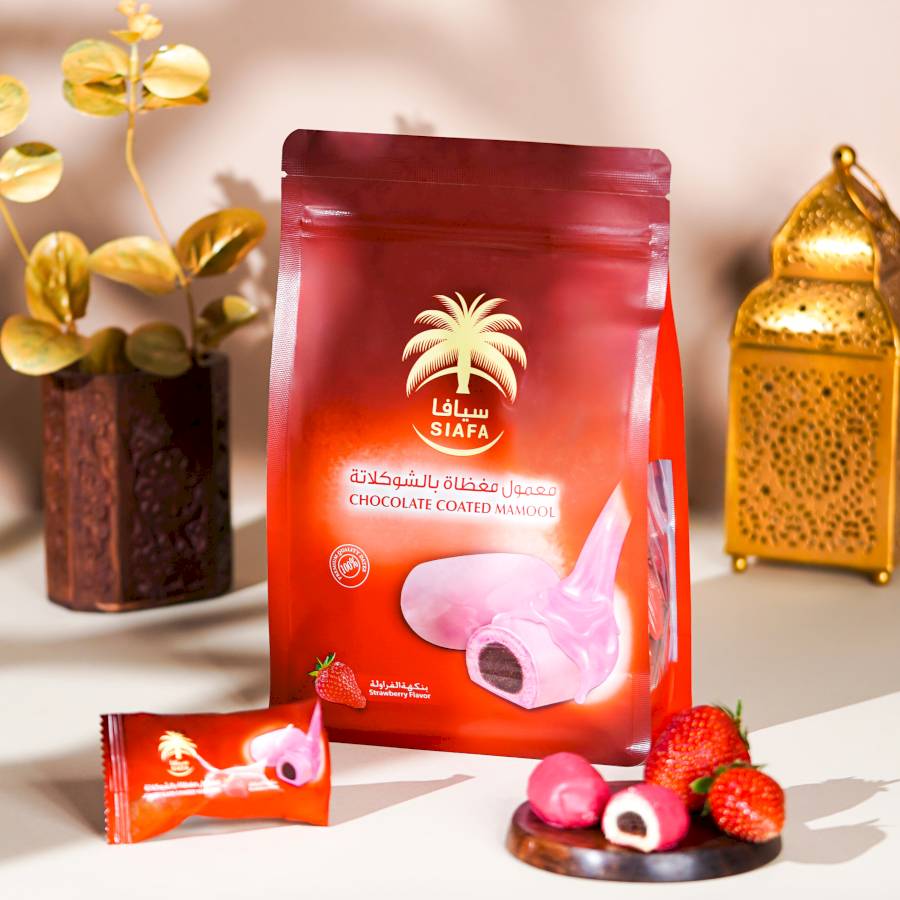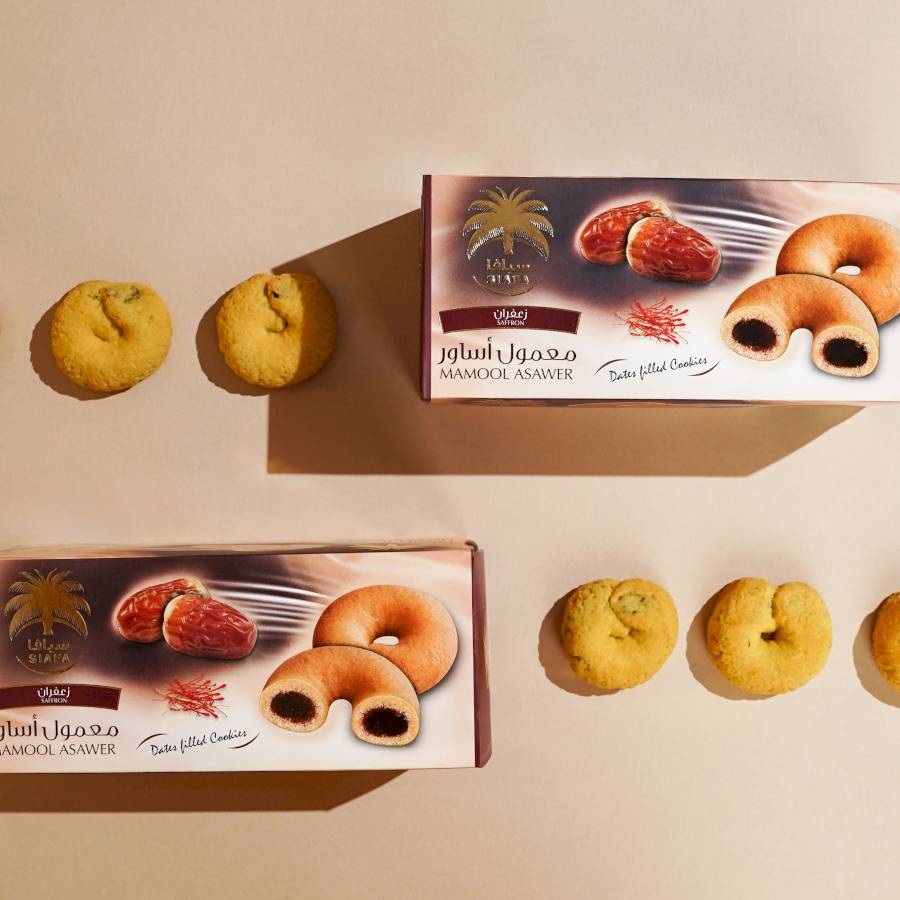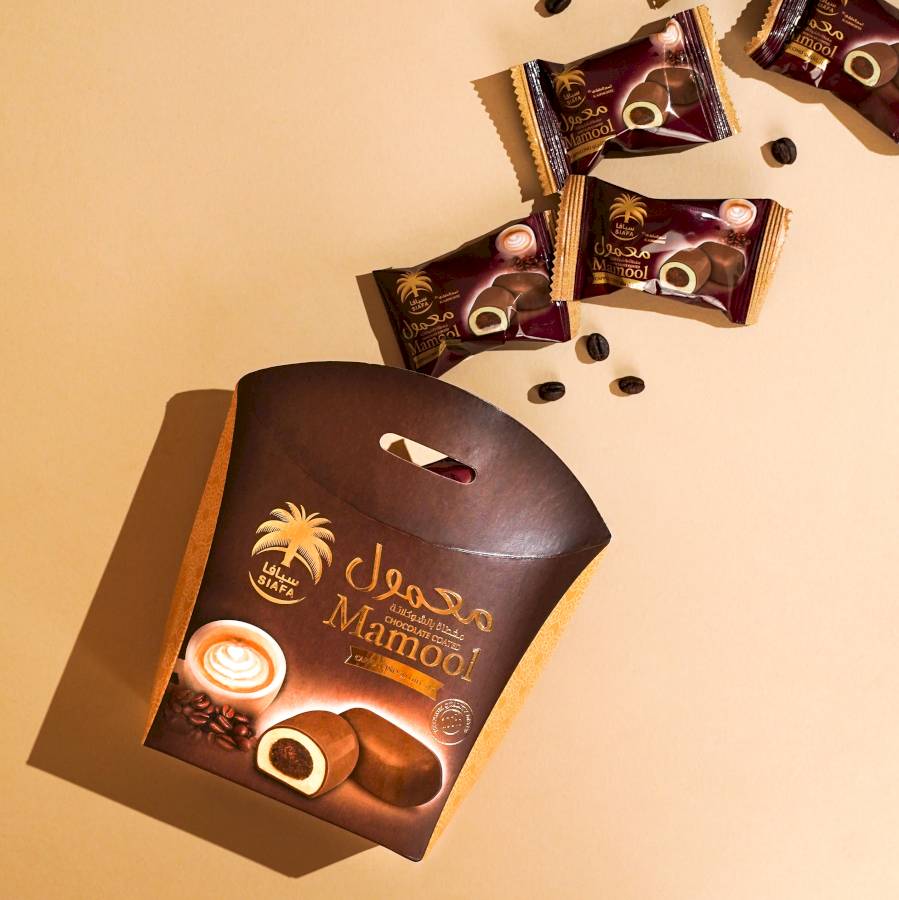



Maamoul, spelled mamool on our own site, is a filled shortbread-style cookie from the Levant, traditionally made with semolina flour and ghee, pressed into a patterned mould, and filled with dates, pistachios, or walnuts. If you've spotted "Mamool & Tamariya" in our menu and weren't sure what it meant, that's exactly what it is.
Maamoul has a genuinely old history. Depictions of similar filled pastries appear in ancient Egyptian temple carvings, and food historians trace a link between Levantine maamoul, Mesopotamian kleicha, and ancient Egyptian kahk, all filled sweets with a shared lineage going back centuries. Today it's closely tied to Eid and Ramadan across Lebanon, Syria, Palestine, and Jordan, and in some communities it's also made for Easter, since the cookie is shared across Muslim and Christian households in the region.
The dough is usually semolina flour, sometimes blended with a little regular flour, worked with ghee or clarified butter, which gives maamoul its short, crumbly texture rather than a chewy one. The filling is what varies: date paste for the most traditional version, or ground pistachios or walnuts, often lightly sweetened and scented with rosewater or orange blossom water. Baked, maamoul is mildly sweet rather than sugary, closer in richness to a shortbread than a frosted cookie, with the filling providing most of the actual sweetness.
Our Mamool Asawer line comes in Plain, Black Seeds, Cardamom, Cinnamon, and With Saffron, plus a No Added Sugar version for anyone limiting sugar intake. We also make chocolate-coated versions in Brown and Strawberry, a Coconut and a Hazelnut variant, and Ajwa Mamool for a date-forward filling. If you want the closest thing to a traditional date-filled maamoul, Ajwa Mamool or Dates Mamool are the ones to start with. The Asawer range leans more into the spice and flavour variations.
Maamoul is normally served at room temperature alongside coffee, either Arabic coffee with cardamom or a stronger black coffee, and it's common to see a plate of maamoul brought out specifically when guests arrive during Eid. It doesn't need refrigeration and keeps well for days in an airtight container, which is part of why it travels well as a gift.
Browse our full Mamool & Tamariya range to see all the varieties, or read about Kunafa chocolate, another Arabian sweet we carry, if you want to compare.
Maamoul dough is typically semolina flour worked with ghee or clarified butter, which gives it a short, crumbly texture. It's filled with either date paste, or ground pistachios or walnuts, often scented with rosewater or orange blossom water.
Maamoul comes from the Levant region, Lebanon, Syria, Palestine, and Jordan, with food historians tracing its lineage back to Mesopotamian kleicha and ancient Egyptian kahk, both older filled sweets. It's traditionally made for Eid and Ramadan, and in some communities for Easter as well.
It's mildly sweet rather than sugary, with a short, crumbly texture closer to shortbread than a soft cookie. Most of the sweetness comes from the filling, whether that's date paste or spiced ground nuts, rather than the dough itself.
Traditional maamoul uses fine semolina flour, sometimes blended with a small amount of regular flour, which is what gives it its characteristic short, slightly grainy texture rather than a soft, chewy one.
Sources differ slightly here. The word comes from the Arabic root for "to make," so it's sometimes translated simply as "made," though it's also commonly explained as meaning "filled" or "stuffed," which describes the cookie itself more directly.